
Women and Sermons in the Early Modern Anglo-Atlantic World
What role did early modern women play in shaping puritanism?
Women who have stood out in writings about the history of the early modern Atlantic World were often known as dissenters or witches. They are portrayed as rebels against their society rather than contributors to it. As one historian famously put it, well-behaved women seldom make history.
Yet women shaped Protestantism within English and North American churches as much as without. This virtual program brings together leading scholars to reappraise the role women played in the shaping of religion during this time period and highlight some of the great digital resources helping us tell a new history of women’s piety and activity.
In this program, Francis Bremer discusses how puritan women played an important part in shaping the nature of puritanism, with new insights into their roles as teachers and preachers. Jeanne Shami and Anne James explore the possibilities for learning more about women through use of the Gateway to Early Modern Manuscript Sermons (GEMMS). And Tricia Peone discusses how the Congregational Library’s New England’s Hidden Histories collection can further the study of women in early New England.
Do you have a question about materials in our collection at 14 Beacon? Get in touch anytime at ref@14beacon.org.
MARCH 22, 2023
KYLE ROBERTS: Good afternoon. My name is Kyle Roberts, and I am the Executive Director of the Congregational Library & Archives. Thank you so much for joining us today, and Happy Women’s History Month. We are so excited to have you for today’s virtual discussion on Women and Sermons in the Early Modern Anglo-Atlantic World.
For those of you joining us for the first time, the Congregational Library & Archives is an independent research library. Established in 1853, the CLA’s mission is to foster a deeper understanding of the spiritual, intellectual, civic and cultural dimensions of the Congregational story and its ongoing relevance in the 21st century. We do this through free access to our research library of over 225,000 books, pamphlets, periodicals, and manuscripts, as well as our digital archive, which has over 100,000 pages in it, many of them drawn from our New England’s Hidden Histories project. And you’re gonna hear more about that project today.
Throughout the year, we offer educational programs and research fellowships for students, scholars, churches, and anyone interested in Congregationalism’s influence on the American story. Please do check out our website to learn more about what we do and for news of forthcoming events.
Our thanks are in order to the Congregational Library & Archives Program Committee for organizing and publicizing this great event. We’ve been so heartened. We had over 135 people register for this talk, which I think really speaks to the importance of this subject and people’s interest in new research on this important topic. Under the leadership of Drs. Adrian Weimer and Frank Bremer, they’ve really done a lot of work to bring together today’s scholars to talk about the newest research on women and religion in the early modern era. And for those of you who don’t spend each day thinking about the early modern era, that’s a period of time we consider kind of 1530 to 1730, so many hundred years before the present, but a really important time in religious history.
I want to give my thanks as well to the Gateway to Early Modern Manuscript Sermons, which has the wonderful acronym, GEMMS, for co-sponsoring this event. GEMMS is an SSHRC funded project to create an open access, group sourced, comprehensive, fully searchable, online bibliographic database of early modern sermon manuscripts from the British Isles and North America. This online database is a finding aid for all types of manuscripts related to sermons, including complete sermons, sermon notes, and reports of sermons. And it has really taken a wonderfully capacious look at archives and has materials in it from the United Kingdom, from Ireland, from the United States, and Canada. The Congregational Library is one of just the many, many partners for this important database project, which really does serve a wide range of researchers.
So enough from me. I’m gonna get out of the way, but I’ve gonna go ahead and bring up my dear friend and colleague, the Rev. Dr. Nancy Taylor. Nancy is the Senior Minister Emeritus at Old South Church in Boston. And Nancy is going to provide our introductions today and will be moderating the conversation afterwards.
NANCY TAYLOR: Thank you, Kyle. Everyone, Dr. Kyle Roberts is our new Executive Director of the Congregational Library, and he is amazing. We are in very good hands. Turning to the program. We have four speakers, scholars today, each presenting a different facet of the subject, women and sermons in the 1600s and 1700s. We will have time for Q&A at the end.
Our first presenter, Francis J. Bremer, is Professor Emeritus of History at Millersville University of Pennsylvania, and a former member of the Congregational Library & Archives board, although he remains an active member of our program committee. Professor Bremer has authored and edited 18 books on puritanism in the Atlantic world, including a prize-winning book on John Winthrop. Recent works are Lay Empowerment and the Development of Puritanism and One Small Candle: The Story of the Plymouth Puritans and the Beginning of English New England. He is currently working on a study of women in the shaping of puritanism, and you’ll hear about that right now. Dr. Bremer.
FRANK BREMER: Thank you very much. The idea for this program came from an essay on women in sermons, which my colleague on the panel, Jeanne Shami, contributed to the Oxford Handbook of the Early Modern Sermon. Her wide ranging and thought-provoking essay caught my attention because I have myself been working on a larger work on the role of women in the shaping of puritanism. Looking at roots, going back at least to the Lollards, culminating in the importance of women as teachers in the 17th century puritan world, and concluding with an explanation of how their role was subsequently diminished late in that century.
Too often, women in the 17th century world have been depicted either as good wives, discussed by Laurel Ulrich, or as dissidents or deviants like Mary Dyer and the Salem witches. There’s no time today to touch on all aspects of this subject. But what I plan to do is to emphasize, perhaps even exaggerate for effect ways in which ordinary women contributed to the shaping of puritanism.
The role of women in the puritan movement needs to be reexamined because it has been historically underestimated. We know that women were commonly omitted in the historical records kept in the early modern era. For example, the Court of High Commission list of those members of Francis Johnson’s separatist congregation who were arrested in 1593, overlooked female members that we know to have been part of that church. Furthermore, as was the case with the role of the laity in general, the earliest historians of the movement, the earliest histories of the movement, rather, were written by clergy such as Cotton Mather and Daniel Neal, both of whom were architects and beneficiaries of a shift of authority within the churches to make clerical leadership more important, a shift that was clear by the late 17th century.
Such clerical historians presented women as disruptors rather than contributors to the faith. Historians writing in later centuries, when the roles of women in society were sharply circumscribed, found the views of Mather, Neal, and others persuasive. In our own time, appreciation of women’s roles in the puritan movement has been further hindered by the fact that many modern scholars discount or dismiss the spiritual dimensions of the past and choose to examine assertive women as using religion to express social, economic, or personal desires. Thus, almost inevitably depicting them as rebels against rather than contributors to their society.
The result of all this is, as David Como has expressed it, that despite recent advances, we remain in many ways ignorant of the precise manner in which women fit into the community of the godly. Pick up most books that touch on this subject and you will find the author pointed to St. Paul’s charge to the Corinthians that “women should remain silent in the churches. They are not allowed to speak, but must be in submission, as the law says.” Because the religious leaders of the Reformation stressed the authority of scripture, most historians accept Paul’s position as definitive, making women who defied this lesson deviants. But some reformers pointed out at the time, and modern biblical scholarship has underlined, that this ignores the fact that Paul’s views were not consistent and that other biblical authorities offered different views. Those supporting the right of women to teach often cited, for example, Joel: “I will pour out my spirit upon all flesh, and your sons and your daughters shall prophesy.”
Puritans insisted that all Christians should seek God’s truth by reading the Bible, including women as well as men. They believed that the Holy Spirit would guide those who were elect to open the true meaning of the scriptures. Because this guidance might come to women as well as men, there were puritans who argued that women could play important roles in shaping the faith of others. It was, for instance, the duty of mothers to supervise the religious upbringing both of their children and of servants within their household. A marginal note to Deuteronomy 21:18 in the Geneva Bible insists that it is the mother’s duty also to instruct her children. As one scholar’s pointed out, this encouraged mothers to assume such traditionally ministerial roles as the explanation of religious doctrine, the explication of scriptural passages, and the interpretation of complex devotional treatises. This could also involve commentary on the sermons they listened to in the parish church, with a godly mother correcting for her children those points made by a preacher whose views she disagreed with.
Women, noted for their skill in understanding the scripture, often provided their insight to a group of fellow believers. Becoming, as Michael Ditmore has put it, prophetical spirits capable of enlightening their neighbors. They might meet in a private home in what puritans referred to as a conference, and the authorities labeled a conventicle. In England, Bridget Cooke held such gatherings in her home in the town of Kersey, near John Winthrop’s Groton. And it is likely that Anne Hutchinson did so in the English town of Alford before her emigration.
The justification of the practice, in or out of church, was that the Holy Spirit led the individual to understand a relevant passage of scripture, and the believer was called upon to share this. Those who allowed women to do so pointed to scriptural examples, such as the four daughters of Philip, the Evangelist, “virgins, which did prophesy.” On occasion, notably in England during the mid-17th century, such conferences could lead to women playing a key role in the formation of an independent congregation, as was the case with the organization of the Broadmead Church in Yarmouth.
Some puritan clergy believed that women had a right to speak in church, at least to share their own religious experiences for the edification of the congregation. As discussed by the puritan… the pilgrim minister, John Robinson and others, the gift of prophesying allowed a layperson to speak in a church meeting, to ask a question, provide their insight on a passage of scripture or matter of faith, or to share their own religious experience. We need to distinguish such ordinary forms of prophesying, which involved drawing on the inspiration of the Holy Spirit to understand the meaning of a passage of scripture, with the utterances of an individual who foretold a future event on the basis of direct revelation, as the prophets of the Old Testament had done. Such predictions were not ordinarily mediated through scripture. Women can be found assuming each of these roles and sometimes could perform both.
A full study of women in puritanism must include ordinary women, including Susanna Bell, Anne Fenwick, and the women who shared their faith with members of Thomas Shepard’s Cambridge, Massachusetts congregation. A few puritans went beyond allowing women to speak and gave them the right to participate in the election of ministers, a notable example being the women of the English church in Rotterdam who were asked in 1633 to vote in the election Hugh Peter as their minister. And some churches chose women to serve as officers, as female deacons, sometimes labeled widows. If women were justified in sharing their faith within the household and in their congregations, there were also those who did so more publicly.
In her study of visionary women, Phyllis Mack listed 243 girls and women whose actions or writings came to the attention of the authorities, the reading public, or the leaders of the movement in the mid-17th century, and hence to the notice of the historian. The fact is that there were recognized roles in which women could express their views and thus help shape the religious movements, which they were part of an equally important point is that in England and in puritan New England, women who addressed religious matters in these fashions found audiences that included men. Most historical studies suggest that women were condemned outright when they attempted to teach men. But this is misleading.
Though it is impossible to document every case, it’s clear that within puritan congregations, women frequently shared their views with an audience that included men. We don’t know how many women actually were allowed to prophesy during congregational meetings, but the fact that John Robinson allowed for the practice makes it likely that women at least occasionally spoke before the entire congregation during the prophesyings that followed regular services in the Leiden Church. Robinson had written that women may make profession of faith or confession of sin, say amen to the church’s prayers, sing psalms vocally, accuse a brother of sin, witness an accusation, or defend themselves being accused. He went further, writing that “in a case extraordinary, namely when no man will, I see not but a woman may reprove the church rather than suffer it to go on in apparent wickedness.” The members of that congregation likely brought that practice to the Plymouth Colony. And the number of women there who owned, not only Bibles but other religious works, lends support to the idea that they did play such roles.
While we don’t know what roles women played in the activities of the Boston Church, we do know that John Cotton believed that “God doth sometimes reveal the greatest mysteries of religion, not only to men of eminent parts and gifts, but sometimes to women.” And when a vote was taken in that church regarding the treatment of those who had left the congregation to follow Anne Hutchinson to Rhode Island, Cotton asked, “I would know how far the wives do consent or dissent from their husbands.” We also know that women, as well as men, made public professions of their faith and spiritual progress. Some congregations may have required such statements from those seeking membership in the church, though I have argued elsewhere that the primary purpose of such professions was to edify.
But the fact is that it was common for women as well as men to share their spiritual journey. In Dorchester, Massachusetts, Roger Clapp described how members of that church shared before all the assembly their experiences of the working of God’s spirit in their hearts, and that many hearers found very much good by this to help them to try their own hearts. The narratives offered in Thomas Shepard’s Cambridge, Massachusetts, congregation include those of 31 women. In England, the Dublin puritan clergyman John Rogers published the narratives of male and female members of his church. Vavasor Powell published a collection of spiritual experiences of sundry believers, including many women. Men were present to hear and learn from the women when they shared such experiences. And men were likely among those who read Susanna Bell’s account of her religious growth in England and New England.
Outside of formal church meetings, there were conferences in which believers discussed matters of faith with men as well as women. While we know that such sessions were an important part of puritan practice, we know few details of them. But those we do know about included men as well as women. And some, such as those held by Bridget Cooke in England and Anne Hutchinson in New England, were led by women. In the Plymouth Colony, while he lived there, the maverick Samuel Gorton presided over such a conference in his home in which the wife of the minister, Ralph Smith, participated. Logically, the men who attended were open to learning from women saints. Going beyond the practice of women sharing their views with a group of fellow saints, in the 1640s, the English Presbyterian Thomas Edwards complained of numerous women who were preaching publicly in London and elsewhere. It was claimed that two female London preachers in the 1640s attracted over a thousand listeners, pointing to the interest many, and presumably not all women, had in hearing their message. Many of the over 200 women listed by Mack in “Visionary Women” were preaching to audiences that included men. Such preaching has been described as one of the most distinctive roles seized by women during the turbulent 1640a and 1650s.
I want to explore the question of men accepting female teaching further by looking specifically at how some women who offered their religious insights were treated in New England. We can start with Anne Hutchinson. The story itself is a familiar one, but I want you to consider it from a different perspective. By focusing on her banishment and the scorn leveled on her by John Winthrop and his peers, we missed some important points.
For a time after her arrival in Massachusetts, Hutchinson was conducting conferences in her home, what Winthrop called a double weekly lecture. Conferences that attracted 50, 60, or 80 at once, where she would offer comments on points made in sermons and in the scripture. Focus on the fact that there were up to 80 fellow colonists in this fledgling puritan community, men included, that were willing to learn from this pious woman. And yet, prior to Thomas Shepard raising an alarm about the ideas circulating in the Boston Church, there were no complaints about these meetings.
Equally important is the fact that in her civil trial, Hutchinson was not summarily silenced, but given the opportunity to engage with the magistrates and the clergy present in debating the meaning of scriptural passages found in the Biblical books of Titus, Corinthians, Ephesians, Hebrews, Jeremiah, and Daniel. Then, after the edict of banishment, while awaiting her separate trial before the Boston Church, she was visited by several clergymen who tried to persuade her of her errors, exchanging with her different interpretations of key scriptural passages. Both before and during that church trial, John Davenport, in particular, was involved in debating with her the meaning of scripture in an effort to persuade her of her errors.
In that trial, John Cotton initially engaged her in discussion of passages from Ecclesiastes concerning her views on the death of the soul. That discussion, which the clergyman, John Wilson and John Eliot joined, and in which Davenport soon took the lead, also involved references to passages in Matthew, Luke, Thessalonians, I Corinthians, Romans, and other books.
Following this, other points were debated with her, with the printed account of the entire church trial running to 33 pages. The clergy did not simply dismiss her as a woman and instruct the other congregants what her errors were. They engaged her in what was in essence, a scholarly discussion. And a substantial number of male as well as female colonists followed her into exile in Rhode Island. Where, we may assume, that she continued to share with them her understanding of the faith.
In the aftermath of this crisis, other New England women also espoused religious positions that challenged the positions taken by most of the clergy. Lady Deborah Moody, who would become convinced that there was no scriptural basis for infant baptism, emigrated to New England in 1639 and joined Hugh Peters’ congregation in Salem in the following year. John Winthrop referred to her as a wise and anciently religious woman. In 1642, she was accused of holding Anabaptist beliefs. Various clergy engaged her in discussions to convince her of her errors, but without success. In 1643, she decided to leave the colony to avoid further troubles and settled in the Dutch portion of Long Island, where she founded the town of Gravesend. On her way to the Dutch colony in 1643, Lady Moody had stopped in New Haven, where she spent time with Anne Eaton, the wife of that colony’s governor, Theophilus Eaton. The two women may have known each other in London before they emigrated, and like Moody, Anne Eaton may have been exposed to Baptist views in that city’s puritan community. At any rate, when the two spent time together in New Haven, Anne became convinced that there was no scriptural justification for infant baptism. In a separate matter, at the same time, reports were circulating in the town that suggest that Anne Eaton had been guilty of domestic violence against members of her household.
John Davenport, the pastor of the New Haven Church at the time, was forced to bring charges relating to the abuse before his congregation in July 1644. The governor’s wife was eventually excommunicated on the charges of domestic abuse. But for our purpose, it is the less familiar part of her story that is of interest. Having discussed the topic of baptism with Anne Eaton, Lady Moody had lent her friend a copy of Andrew Ritor’s recently published, “A Treatise of the Vanity of Childish Baptism.” Anne proceeded to read the work secretly, and it secretly engaged her spirit in that way. On a Sabbath morning in late 1643 or early 1644, Anne Eaton rose from her favored position in the front of the meeting house as the congregation was preparing for the Lord’s Supper, and she walked out of the church. That afternoon, she absented herself from an infant’s baptism.
The New Haven Church held regular Tuesday evening conferences where members could discuss matters of faith. Some of the attendees asked that Eaton explain her behavior, and she set forth her concerns. The result was a dialog in which a woman was expressing and defending views that were different from Orthodox understanding. Davenport attempted to persuade Eaton of the validity of infant baptism. He addressed her concerns in the parish conference sessions. He borrowed her copy of Ritor’s book and preached a series of sermons refuting its points. During one of those sermons, Anne was heard to say, ”it is not so,” after a point he made.
Anne Eaton was ex-communicated for her acts of domestic violence, but was not charged before the church with her possibly heretical views on baptism. Never banished from the town, she was provided a bench outside the meeting house doors where she could still listen to sermons in the hope that she would be reconciled. But my point in raising this episode is that once again, puritan clergy and other males were willing to engage a woman in debates over scripture rather than simply dismissing her.
There’s no evidence that any women entered a pulpit or equivalent to preach in 17th century New England. The story is different in England, where, as previously noted, the collapse of many norms led to numerous women formally preaching during the 1640s. That this is an opportunity which some New England women may have wished for is suggested by the final story I wish to share.
Sarah Dudley was the daughter of Thomas Dudley, the first deputy governor of Massachusetts who was referred to by his other daughter, the poet, Anne Dudley Bradstreet, as being two sectaries, a wick, and a maw. All of the Dudleys, including Sarah, may have known the Hutchinson family in England, but they certainly had contacts with Hutchinson when they all found themselves in Massachusetts. It’s tempting to wonder if Sarah had ever joined the conference of believers that had met in Anne’s home.
In 1639, Sarah married Benjamin Keayne, the son of the Boston merchant Robert Keayne. In 1642., Benjamin traveled to England to represent his father’s business interests, and Sarah soon followed. In London, she embraced the newfound freedoms that were available to women. And in 1646, Stephen Winthrop, John’s son and a serving officer in Cromwell’s army, wrote to his father that “my she-cousin Keayne is grown a great preacher.” Her marriage had fragmented during this period, and her husband noted that she had fallen into errors of judgment as well as practices that included breach of the conjugal knot. Sarah returned to New England later in 1646.
In 1647, the first Church of Boston excommunicated her, in part for irregular prophesying in mixed assemblies. Whether… while possibly referring to her actions in England, it could be an indication that she continued to preach in New England. What I’ve tried to do in this brief talk is to suggest the need for reopening the story of women in the puritan world. Females, as well as males, were expected to read the scriptures. All who were elect, regardless of gender, could receive inspiration from the Holy Spirit that would enable them to have insight into the meaning of Biblical passages. And they were allowed to, indeed encouraged, to share those insights in a variety of ways. While there were clear limits on the political, social, and economic roles that women could play, in puritan religious communities, they were allowed to express themselves and did so in a variety of ways: in writings, within private mixed gender conferences, by offering testimonies of their spiritual progress, by prophesying in church meetings, and occasionally by formal preaching. This was not as exceptional as is commonly assumed.
And equally important, their audiences included men who were receptive to their teachings.
Thank you.
NANCY: Frank, thank you so much. That was fantastic. Fascinating.
We move now to Professors Jeanne Shami and Anne James, who hail from Saskatchewan, Canada.
Dr. Shami is Professor Emeritus at the University of Regina. Her interest in sermons spans over four decades. She has also written on women as preachers, patrons and transmitters of sermons, on building a community of sermon scholars, and more generally, on the place of sermon in early modern religious and political culture. Professor Shami co-edited the “Oxford Handbook of John Donne,” and her current research on Gateway to Early Modern Manuscript Sermons is a bibliographic database of manuscript sermons and sermon notes, which you’ll hear about.
Dr. James is an Adjunct Professor in the English Department at the University of Regina. She is a principal investigator on the GEMMS: Gateway to Early Modern Manuscript Sermons Project, a commentary editor on the John Donne Prose Letters Project, and the author of “Poets, Players, and Preachers Remembering the Gunpowder Plot in 17th Century England.” They will speak on manuscript and sermons, women and sermon culture.
Professors Shami and James.
JEANNE SHAMI: Thank you very much.
So in today’s talk, Anne and I will discuss, mainly through the lens of manuscript sermon records, how women participated in the robust culture initiated by sermons in the English Church after the Reformation. Increasingly in the context enlarged by vernacular preaching, they figured as subjects of sermons, but they also exerted influence as patrons, auditors, collectors, translators, and even preachers.
A little bit about two resources for studying manuscript sermons. The dominance of scholarly focus on printed sermons, such as those available through Early English Books Online, has been mitigated by two resources essential to study of women and sermon manuscripts: Perdita and GEMMS: Gateway to Early Modern Manuscript Sermons.
So Perdita exists in the two forms on this slide: a frame-based, open access version housed at Warwick University, and a commercial product entitled Purdita Manuscripts 1500 to 1700, available by institutional subscription. Both versions are the fruit of archival retrieval, description, and analysis of manuscripts written, compiled, transcribed, edited, and translated by women. For the study of women in sermons, Perdita provides information about women as sermon translators, scribes, and note takers, and allows researchers to place sermon materials within the context of entire manuscripts and networks of transmission. And I won’t, I won’t go on… Thank you very much Kyle for describing this database.
So GEMMS is a bibliographic database and finding aid devoted to manuscript sermons and sermon notes for the period 1530 to 1715. It includes metadata for complete sermons, notes, outlines, and reports of sermons, such as those that occur in sermon diaries, registers of preachers, and lists. The fully searchable database also allows browsing by repositories, manuscripts, people, preaching locations, and biblical texts, and features brief biographies of preachers and links to manuscript descriptions in online catalogs. The project enhances the resources for understanding sermons, especially in their more routine manifestations, taking researchers closer to preaching occasions and to understanding how sermons were transmitted within communities, families, and other groups. It aims to uncover sermons of less well-known preachers preached across a wide variety of locations, denominations, and occasions, and to develop a group-sourced archive that can provide an online forum for collaboration among sermons scholars.
I’m going to say a little bit about women as preachers now. As Frank has just so persuasively demonstrated, considerable historical scholarship underwrites the subject of women’s contributions to religious life in post-Reformation England and New England. Uncovering how, despite vociferous theoretical and actual opposition to women preachers within mainstream religious culture, many women, particularly among radical and marginal groups, engaged in what can be called a preaching ministry that covered England and Ireland and ranged from Massachusetts to Malta. This is Mary Fisher preaching to the Sultan of Turkey, one that I particularly like.
So these lay preachers found opportunities for expression among anti-clerical non-conforming congregations that included men as well as women, as Frank has proven, but were often seen by ecclesiastical authorities–bishops or presbyters–as dangerous to religion and social structure. The Quakers, yes, thank you, were the most advanced supporters of women preachers, applying the term preaching not only to women who expounded scriptures in public, but to any voicing of religious opinion in print, in the church or congregation, in the company of others anywhere, and even in the home in disagreement with one’s husband. Contemporary pamphlets attacking these women proliferated and sadly remain the most detailed sources for the kinds of activities excoriated.
Those who persisted in unauthorized preaching activities endured a multitude of penalties: constant surveillance, imprisonment, fines, ducking. These women were put in the stocks, searched for signs of witchcraft, whipped, attacked, beaten to death, threatened with butcher knives, and led through the streets with iron bridles, a punishment normally reserved for scolds who undermined their husband’s authority. In extreme cases, they were transported to Jamaica for their intransigence.
Although evidence of a flourishing preaching culture that included women in the 17th century abounds, however, history has left us with a profound puzzle. Why are there no extant print or manuscript witnesses of formal sermons preached by women? The puzzle is compounded by the proliferation of printed works by women, particularly among Quakers. Published writings by more than 80 radical women survive from 1640 to 1680, for example. And as many as 300 female prophets were active between 1640 and 1660. These publications comprise oracular speeches or prophecy, which I guess we are considering as preaching, conversion narratives, spiritual autobiographies, and personal correspondence, including narratives of the sufferings they endured for their preaching ministry, and controversial tracts, exhortations, advice, warnings that could reach a wide audience and often went through multiple editions.
From these, we can discover a Quaker homiletic in reports of sermons in journals, epistles, and tracts. But there are no printed or manuscript sermons by Quaker women from our period. Not one. Enemies of female preachers such as Thomas Edwards, who authored this work, provide obviously biased accounts of these occasions, most notoriously sermons by Mrs. Attaway preached at Bell Alley Baptist Church to huge crowds. But resorting to male written polemics for evidence of women’s preaching is clearly problematic.
Readers familiar with the standard definition of an early modern sermon, summarized as a discourse upon a text from the Bible delivered to a congregation or auditory by an authorized minister, will recognize that definitions of preaching limiting its meaning only to public scriptural interpretation, usually as part of an official worship service by an ordained minister, exclude activities that, as Frank has shown, we and many contemporaries construed as preaching, including repetition of sermons, domestic instruction based on sermons, and biblical exegesis in public circumstances outside official worship services.
By describing their activities as prophesying, teaching or performing some other authorized act when preaching was forbidden them, women succeeded in escaping the abuse and penalties I described above and in fact contributed substantially to the religious culture of their communities. At the other end from preaching as prophecy, that is speech inspired by the Holy Spirit, is the notion of a sermon as a composition with specific generic features, notably exegesis of a biblical text, divided, explicated, and applied, often by collating the words of the text with other biblical passages.
The only known example of such a sermon by a woman is Anna Walker’s “A Sweete Savor for Women,” British Library Manuscript Egerton 1043. Now, Anna Walker, she’s the lady in blue, was court lady to James’ first queen consort Anne of Denmark, the other lady, both of whom are pictured here in an illustration by Anna Walker, emphasizing their lineage, their fathers. Walker’s sermon follows many of the sermon’s generic codes, including self-conscious choice of text. In her case, the text Colossians 4:5, walking wisdom toward them that are without redeeming the time, which allows her to pun on her name, Walker, throughout the sermon. The sermon also develops by division and application of that text and is prefaced by a dedication to the Queen. Additionally, the manuscript reveals its history of transmission to at least one other female reader through the signature of Elizabeth Wilbraham, daughter of Queen Anne’s chancellor. Ironically, however, the only sermon bearing the generic marks of biblical exegesis, structure, and other homiletic features has no known public history.
I’m going to say a little bit now about women as sermon subjects. The study of women as subjects of sermons has generated vigorous debate about the value of sermons as historical and biographical sources, but has been based almost entirely on printed sources. The surviving archive of printed funeral sermons, however, provides only a limited, idiosyncratic account of a few literate, upper class, primarily puritan women. The manuscript archive, however, offers rich resources for studying women as subjects of sermons. Currently GEMMS offers 89 such examples, most of them unknown to scholars.
While the majority are funeral sermons, GEMMS also has metadata for three wedding sermons, a memorial sermon, a churching sermon, and a baptism sermon. Significantly, of these 89 sermons, only three survive in print. This means that material for detailed study of women as subjects of sermons, especially funeral sermons, abounds in the manuscript record and provides access to the lives of a much wider range of ages, classes, and denominations than that available in printed records. Many of these women are known only as Widow Walker, Mrs. Livesey, and in one case, only by the Christian name, Sarah. Several funeral sermons were recycled to commemorate more than one woman, or in one case, a husband and wife. And the case of Catherine Henry offers a rare instance of two different funeral sermons, one of them copied by her granddaughter.
A digitized Clark Library commonplace book provides one instructive example of how access to the full manuscript enhances GEMMS’ metadata and contextualizes the sermon subject. This manuscript is a commonplace book that includes the writings of Anne Ley and her husband, Roger. Compiled by Roger, curate of St. Leonard’s Shoreditch London, and spanning the years 1623 to 1667. The commonplace book, almost entirely in Roger’s hand, includes extracts taken from Bishop Hall’s meditations by Anne, Anne Ley’s poems and letters, her will, funeral sermon and epitaph, and sermons, treatises, and elegies by Roger Ley himself. Two poems occasioned by sermons occur in the manuscript, including one in the form of an acrostic, along with several poems to ministers. The manuscript taken in its entirety, presents a richly detailed account of a curate’s wife beyond what can be gleaned from her funeral sermon and illuminates her sustained interactions with a religious culture dominated by her parish church and the sermons she heard and responded to there.
The material supplementing John Squire’s meditations on Anne Ley in the preface and speech following her funeral sermon offer biographical details and a keen sense of Anne’s place in her parish community. Inspired by Revelation 14:13 but preached on Job 19:25, texts are there, as she… as Anne requested that text in writing, the sermon contemplates the recent deaths of three friends and bears the weight of John Squire’s personal despair, as well as his sense of what the community has lost. Squire laments that Ley did not live long enough to instruct his child, and in the same breath that her death and the deaths of the others have diminished his parish. He says, “and woe is me that death hath taken away one more of my small congregation, which by little and little will at length melt into nothing.”
Nonetheless, he finds words to praise Ley’s religious demeanor. Like the subjects of many funeral sermons, Ley is depicted as a model of modesty, temperance, bashfulness, and obedience, womanly qualities, right? And an example of excellent moderation. Such conventional praise, however, is supplemented by his account of her faithful contract to wait for Roger seven years until they could afford to marry and her frugality, laboring without a servant, which he says few ministers’ wives would do. Her religious character as an attentive and charitable auditor who understood, as he said, the knotty points of popery almost as well as the preacher, is confirmed elsewhere by two poems in the commonplace book, one on a sermon delivered by Squire’s relative, Mr. John Lynch on patience and affliction, and the other an acrostic on John Squire, responding to an anti-papist sermon preached on January 6, 1623 at St Paul’s. Both of these poems confirm the impression created by Squire’s funeral reflections on Ley that she was someone valued within her community who, with her husband, responded to the community’s needs by founding a school and their values, the royalist and conformist ecclesiastical networks described in her Perdita biography.
So I’ll ask Anne now to talk about women as note takers.
ANNE JAMES: Numerous printed sources describe women taking notes at sermons or recording them later from memory. The extraordinary feats of attention or recall claimed in these documents, such as Lucy Hutchinson, recalling that she could write ser… excuse me, recite sermons at the age of four, seemed to have become conventional, particularly in funeral sermons. Nevertheless, the manuscript record shows that women across the religious spectrum engaged in note taking. Beyond their role in private devotion, these notes could be used for domestic construction or circulated within the family or religious community.
Oliver Heywood provides a detailed account of his wife Elizabeth’s note taking in his autobiography. Taught to write by a local schoolmaster, she was, “able at six years of age to write down passages of the sermon in the chapel, which she, by continual use of in process of time, did gradually grow to a great perfection in so that she could have repeated a sermon very methodically, distinctly, and succinctly. She writ longhand and not characters, yet she took the heads and proofs fully and a considerable part of the enlargement, yay and observed and rendered them in a serious drift and design, so that I have heard some say they never heard their sermons so exactly repeated.”
While Haywood took notes in longhand, Cosmo III, Duke of Tuscany, visiting England in the restoration, described women taking notes at sermons, having in the letters abbreviations which facilitate to them. Few shorthand notes survive, suggesting that these were generally rendered into longhand at home. Most notes were probably taken with pen and ink. The young Mary Evelyn’s sermon notes are written on small paper covered pamphlets that could have been slipped into a Bible for carrying to church. Some note takers, however, may have used reusable surfaces. Elizabeth Hastings describes transcribing notes taken imperfectly out of my table books. These were likely tablets of stiff paper treated so that writing with ink or a stylus could be erased with a moistened sponge.
While spouses like Haywood and preachers of funeral sermons lauded women for their note taking accomplishments, not everyone agreed on its advisability. Samuel Clarke remembered his wife, Catherine, writing to prevent drowsiness and distractions and to help memory. But Sir Ralph Bruni advised his goddaughter’s father to prevent her from learning shorthand, “for the pride of taking sermon notes hath made multitudes of women most unfortunate.” Today, I’ll focus on several sets of notes that illustrate both the broad range of note taking practices and the challenges presented by the devotional miscellanies, sermon notebooks, letters, and diaries in which they are preserved.
The notes of Ursula Wyvill, wife of Sir Christopher Wyvill of Constable Burton, Yorkshire, survive in a devotional miscellany copied by her sister-in-law, now at Yale, and available on Perdita. Miscellanies are complex sources, since they are often written by multiple people, so that women’s names or signatures are not necessarily reliable indications of authorship. Most of this notebook is written in the hand of Wyvill’s sister-in-law, but pages 4 to 27 are a discourse on the eucharist in another unidentified hand. Wyvill’s sermon notes begin at page 49, following other devotional materials.
While women like Haywood took notes in church, Wyvill and others relied upon their memories to write short summaries later. Unfortunately, Wyvill gives only the surnames of the five, possibly six, preachers whose sermons she summarizes, a frequent challenge in these sources that makes identification uncertain and sometimes impossible. Place names sometimes compound the problem. This preacher is identified as “Mr. Smith of Jegston,” apparently to distinguish him from another Mr. Smith, but the place no longer seems to exist. Like Haywood, Wyvill became adept at recognizing sermon structures.
She begins her summary of a sermon by Mr. Jackson on John 6:27 with, “he divided his text into three, an exhortation, a correction, and a direction.” Notes on other sermons similarly reproduced the divisions in the text. However, she could also recognize deviations from this structure. The following notes on another of Mr. Jackson’s sermons, this one on I Peter 4:4, begin, “he made no division in that text, but raised propositions or doctrines.” An unusual feature of these notes is Wyvill’s use of the third person pronoun, since most note takers maintain the preacher’s voice.
Despite the claims of faultless memory in funeral tributes, women like Wyvill must sometimes have struggled with retention. Mr. Paget’s sermon on Luke 16:19 ends with, “pardon me, oh my God, and strengthen my weak memory,” followed by an unsuccessful attempt to finish the notes later. Perhaps Mr. Paget was not her favorite preacher, since she noted only a few lines of another sermon before abandoning the effort. Occasional blank spaces at the ends of other sermons suggest that she may have hoped to add to them later.
Mary Hase’s sermon notebook, also held at Yale and available on Perdita, is a manuscript dedicated to a single preacher’s sermons and set up to imitate a printed book. Hase could not be identified; however, the preacher was John Fairfax, appointed rector at Barking with Needham Market in 1650 but ejected for failing to conform in 1662. Despite warnings from authorities, Fairfax continued to preach, most notably funeral sermons for well-known nonconformists Matthew Newcomen and Owen Stockton, printed respectively in 1679 and 1681, and a later sermon also printed on the opening of a new church building at Ipswich in 1700. Two of his sermons, dated between 1668 and 1678, also exist in manuscript at Dr. Williams’s Library.
Hase’s series of 18 sermons on Psalm 75, preached in 1658, as well as the sermon on John 14:1 are not known to exist elsewhere in either print or manuscript. Given the detailed, careful structuring and neatness of these sermons, it seems likely that they were either expanded from notes taken in church or that Hase had access to a manuscript copy.
Katherine Austen’s Miscellany is held by the British Library and available on Perdita. It consists mainly of verse meditations, accounts of dreams, and other miscellaneous writings completed between 1664 and 1668, after she was left a widow with young children. Among these materials are notes from Daniel Freetly’s, sermon on Psalm 73:25 and excerpts from Jeremy Taylor’s “On the Last Judgment,” both taken from print editions. Austen quotes some passages of Freetly’s sermon almost verbatim, but paraphrases and summarizes others, creates transitions after lengthy omissions, and rewrites lists as continuous prose. In the Taylor excerpt, Austen pares down lengthy sentences, but again transcribes some passages with few changes.
Curiously, in both cases, a passage from early in the sermon serves as a conclusion, altering the sermon’s original structure. Situated among her brief meditations is a passage on angels extracted from the printed edition of John Donne’s 1620 Trinity Sunday sermon at Lincoln’s Inn. Austen does not cite Donne, but adds a see reference to Freetly’s admonition against praying to saints. Such borrowings illustrate the difficulties of distinguishing sermon notes from other devotional materials, but they are also important for reviewing women’s reading habits. Whether written in church, constructed from memory, or taken from printed sources, notes were intended to be used. Philip Henry called note taking “hearing for the time to come,” and Simon Ford praised Lady Elizabeth Langham for having reread her notes daily, “unlike those who turn their notes to wastepaper so soon as they fill their books as is to be feared, too many do.” A practice Henry also condemned. And if you know anything about the Henry archive, you know he never threw out anything.
Along with private devotion, sermon notes might be used for instructing children and servants, tasks that often fell to women. Langham required oral or written accounts from servants, depending on their ability, then helped their deficiencies with her own, “exacter notes.” And she taught her stepdaughter to repeat sermons. While Margaret Corbitt read servants her notes so that they might be better prepared to give an account to her husband.
Perhaps surprisingly, the audience for Heywood’s recitation seems to have included not only her husband, but the preachers of the sermons themselves. The devotional writings of Austen and Wyvill were clearly intended for their personal use. A note in Austen’s manuscript warns, “whosoever shall look in these papers and shall take notice of these personal occurrences will easily discern it concerned none but myself and was a private exercise directed to myself.” Nevertheless, the manuscript’s preservation gives testimony to its importance as a family document, as does Wyvill’s sister-in-law’s care to transcribe her writings. And you can notice that little bit of shorthand there.
Although sermon references are generally brief, diaries and letters provide additional evidence for the creation and circulation of manuscript notes within families and communities. As a young woman in the 1680s, Philip Henry’s daughter Sarah summarized recent sermons in letters to her brother Matthew, presumably for his spiritual encouragement. In 1721, Sarah’s diary records her transcription of several manuscript funeral sermons for her son Phil, who had died of smallpox. While in later years, she notes rereading them on the anniversaries of his death. She also records pleasure at rereading notes she had taken at her father’s sermons many years earlier.
Women’s sermon notes describe… deserve more study. We need to understand better how notes were taken, used, and circulated, especially how women’s note taking habits may have differed from men’s, especially given the differences in their educational paths. How much did sermons influence women’s own rhetorical styles? Ideally, researchers would like to compare the preacher’s notes, several sets of auditors’ or readers’ notes, and a printed copy. But discovering such a complete set for even one sermon seems unlikely.
Nevertheless, expanding our understanding of women’s note taking in both Britain and America would contribute to solving some of the challenges I’ve introduced today.
NANCY: Jeanne and Anne, thank you so very much. Really interesting.
Our final presenter, Trisha Peone, is the Project Director of New England’s Hidden Histories at the Congregational Library & Archives. She holds a PhD in history from the University of New Hampshire with a specialization in the early modern Atlantic world and the history of science. Prior to joining the CLA, she was Research Scholar at Historic New England for the Recovering New England’s Voices Project. Dr. Peone’s scholarship focuses on early modern magic and witchcraft, and her work on these subjects has appeared in journals, books, blogs, and on radio and television. Dr. Peone.
TRICIA PEONE: Thank you.
So I’d like to start today by telling you a little bit about the New England’s Hidden Histories Project. New England’s Hidden Histories is a digital project of the Congregational Library & Archives, which preserves and provides access to early New England church records. The project comprises an online collection of manuscript records of Congregational churches from the 17th through the early 19th century and includes letters, sermons, diaries, records of baptisms, marriages, and deaths as well as firsthand accounts of a range of events from ecclesiastical councils and town meetings to the Salem witch trials and the American Revolution. These records provide context about communities that can help us to more fully understand the lives of New Englanders. And this project works in partnership with libraries, archives, museums, churches, and other repositories in all six New England states to digitize these records. The project also produces literal transcriptions of these early documents to increase accessibility.
So today I want to look at a few examples of how the records of New England’s Hidden Histories can shed light on early modern women and some of the ways that they participated in congregational life and in shaping their communities. So we’ll look at some collection… or some examples from the library’s collections of funeral sermons, church disciplinary records, and diaries.
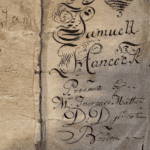
So funeral sermons, like these you can see here, were usually printed for significant community figures upon their deaths. And far fewer were printed about women, as you might expect. And they were typically printed about women who were the wives of ministers, or wealthy merchants, or government officials. Printed funeral sermons though show that, even though they’re obviously being delivered and written by men for the most part, we can still read them for biographical details of women’s lives, as well as sometimes even women’s interventions in the sermons.
A well-known example is on the left there, and that’s “Victorina,” Cotton Mather’s, funeral sermon for his daughter Katherine, published in 1717. In the sermon, Mather praised his daughter’s piety, suggesting that piety was, “a more noble sort of prophesying, and that this way of speaking in the church is allowed, even to the female sex.” But Katherine is also allowed to speak through her father’s text because he quotes her at length discussing the pleasures of piety. It tells us that his daughter asked him to speak in particular to the young people of New England and encourage them to live virtuous lives. So in a sense, through her death and this publication, Katherine was able to speak to us even beyond her father’s congregation.
Another example is the funeral sermon on the right for Mary Benning Wentworth Martyn, printed at her death in 1725. She was 80 years old when she died, and she was the mother of New Hampshire’s Lieutenant Governor, John Wentworth. So her sermon was delivered in Portsmouth at North Church by Rev. Jabez Fitch, and although we find very little biographical information about Mary Martyn in her funeral sermon, Rev. Fitch noted that her dying request was, “that it should be printed for the use of her posterity.” And he titled his sermon on Mary Martyn, “A Discourse on Serious Piety.” And he asserted that Martyn had asked him to preach specifically on this topic because she had learned from it and hoped that others would benefit from hearing it.
He noted that he spoke with her the day before she died. And he said that, “she strictly forbade anything should be said in her praise, which was a good evidence of her humility to me, that I shall not contradict her humble mind by enlarging on her character. But it must be acknowledged to the praise of divine grace that she gave abundant evidence to the charity of her neighbors, that she was a person of serious piety, and that she had chosen that good part which shall not be taken away from her and is now reaping the happy fruits of her wise choice in a blessed eternity.” And he concluded his sermon by instructing “all of the descendants of this good, gentle woman, regardless of their gender, to follow her example.”
So how can we find out about women in early England beyond what is printed in these funeral sermons? I will suggest to you that New England’s Hidden Histories helps us to trace some of their stories.
So the records of the First Parish Church in Dover, New Hampshire, which was attended by Mary Martyn before she went to Portsmouth, shows other women in the Wentworth family getting married, having their children baptized. They also show Mary’s grandson, Benning Wentworth, who became the Royal Governor of New Hampshire, signing a petition about church matters. And then we can find even more information about the subject of this third pamphlet in the middle, “A Funeral Discourse Occasioned by the Death of Mrs. Hannah Williams.” And that was delivered by her husband, the Rev. William Williams, at their church in Weston and printed in Boston in 1645.
Hannah Stoddard Williams was born in 1688. She married Rev. Williams in 1710, and they had at least seven children. Like many other ministers’ wives in early New England, Hannah was also the daughter of a minister, Solomon Stoddard of Northampton. And her mother, Esther Warham Stoddard Mather, was the wife of the first and second ministers of Northampton. After Stoddard died, she married Eleazar Mather, the brother of Increase.
So the role of a minister’s wife is often overlooked in history of a congregation. Even in her funeral sermon written by her husband, Hannah Williams isn’t mentioned until the 25th of 32 pages. We don’t get a lot of biographical information about her from that sermon, but we do find her presence documented all over these church records, as you can see in this slide up on the screen. You can see her name has been almost written in bold by Rev. Williams. He’s put two asterisks next to her.
So he notes that she joins the church in 1710. He’d become the minister in 1709. So they married shortly thereafter. And she had previously belonged to the South Church in Boston, where she also appears in the records. And you can see that he entered her death on the same page later on. So in the funeral sermon, he tells us that Hannah was greatly favored of God, and that she had been, “a great blessing to me and to my house and to this town.” He praised her for being faithful, kind, and self-denying, as well as for keeping every person and thing as much as possible in their own order, place and business in the household. So the ideal Congregational wife.
Williams reported that Hannah’s last words were “now let my spirit depart in peace.” So her last words are printed in the funeral sermon in 1745. You can see on that last page that Williams wrote them down first and the church records. He noted December 29, 1745, Lord’s Day in the Morning went to her everlasting rest with Christ saying just before she breathed her last, “now let my spirit depart in peace.” So she dies in 1745. He remarries in 1749. Reverend Williams and Hannah Williams are both buried in Weston. His epitaph describes him as a learned, laborious, and reputable pastor. And Hannah’s describes her simply as his consort. So you can see her there as Hannah Stoddard in her father’s church records as well.
These printed sermons provide us with a lot of rich information about early modern women’s lives, especially when we pair them with church records. And we’ve got here at the CLA over 100 printed funeral sermons about women. Many of them have been digitized by the library and are available on Internet Archive.
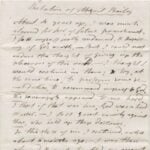
So I want to draw your attention to another exciting resource, which is church disciplinary records. So last year, my colleagues here at the CLA created a digital exhibit exploring some Congregational disciplinary records. Here, what I’m showing you are some letters in the case of Mary Tilden in Connecticut, Lebanon, Connecticut, in the 1730s. So she left her husband, Stephen, and the church intervened. The records in this case give us a couple of reasons why Mary might have left her husband. She writes in one letter that Stephen had committed the sin of fornication with a woman named Sarah Ellis. A witness who testified in this matter said that she had visited their house and that Stephen Tilden was often violent towards their children and also to an enslaved person in their household. And the witness stated that, quote, about Stephen, she said, “I thought he had the least tenderness that I’ve ever seen in any man in my life.”
So it appears that a church committee was appointed to look into this matter, and they heard the testimony, and they solicited these witnesses, and then instructed Mary Tilden to move back in with her husband and forgive him. So in a letter, Mary does ask for his forgiveness, but she notes that the committee has told her, “it is just and reasonable that you should confess to me your faults and harsh treatment of me and ask for my forgiveness thereof.” And she tells them that if he will comply with the committee, that she’ll return to him as a loving and beautiful wife. Although she says that she knows that, “neither the committee nor the church can require of you a compliance with their advice. Yet I think you can’t do any less than allow me to insist upon it.”
So in her next letter, we find out, though, that Stephen has utterly refused to comply with the advice of the committee. And I should note that although some of these letters are, like these examples here, are addressed to Stephen from Mary, it’s also reasonable to assume that they were not intended to be privately read by Stephen, but also by the church committee.
So the records in this case include two witness statements, two letters from Mary to Stephen, and one letter from Mary to the minister and church committee. And then lastly, there’s a letter from the minister, Rev. Solomon Williams. It’s about a year later after these first letters. And in his letter, he writes to Mary, the minister, informing her that her husband has appeared at a parish meeting and proclaimed that he believes she should return to him, and the church votes on it. And so the minister’s informing Mary that they voted she should appear next Sunday in church. She should make a public confession of her offense and then return to live with her husband. However, the minister at this point, he sends a letter to a house where Mary was no longer staying. And so he writes a little note in the records that Mary has left town for unknown reasons. He didn’t know why she hadn’t complied with the direction of the church to return to her husband.
Some of the other records from the church show Stephen stays in the town. The church later voted for Stephen to help build a new meeting house a couple of years later. Not sure what happens to Mary. She doesn’t appear in any of the other surviving records. But this is an interesting case for thinking about women’s response to church discipline. Mary Tilden pushes back in her letters, clearly, and she simply doesn’t comply with the committee’s orders.
We have several other interesting examples in NEHH of these disciplinary cases against women. And later in the 18th century, we also find records of church disciplinary cases against women of color.
One of these cases comes from a New Hampshire church, and it describes a Black woman in her twenties called Dinah, who had joined the church in 1791 and is excommunicated in 1796 for allegedly, “not walking agreeable to your profession.” The minister called her a covenant breaker for not submitting to be governed by the church. And that particular case isn’t up on our website yet, but it is in process.
So lastly, NEHH also has some remarkable diaries. This is the diary of Mary Dodge Cleveland of Ipswich. She kept a diary in the 1740s and 1750s, starting when she was about 20 years old. She wrote after the death of her father in 1742, “I was exceedingly dead in prayer. I went to the house of God with a dead heart. I was very loathe to go to the meeting.” And she later describes herself as “the chief of sinners” since she had received the sacrament with unspeakable deadness. And this is one of these pages where she… you can see that she is saying that she was dead of heart.
Although it’s not a very long diary, it’s evidence that in the early 1740 she is clearly going through something. She also mentions the revival of the work of God in Ipswich and the Revs. Whitfield and Tennant, and the flocking of souls to Christ. So she marries the Rev. John Cleveland in 1747, after which she didn’t write very much in her diary. Her later entries are sparse. They’re about deaths in the community and the births of her children. So I’m showing you a photo also of her grave marker, which she shares with her husband’s second wife, who is also called Mary Cleveland.
So around the same time that Mary Dodge Cleveland is keeping her diary, we have, in Ipswich, we have two more remarkable documents from the same church in Ipswich, MA. So here you can see testimonies from two enslaved Black women. One is confession from a woman called Flora in 1749, and the other is a relation of faith from Phyllis in 1764.
So the document on the left is from Flora, and she writes to the congregation, “I do therefore beg leave for your satisfaction with my own humiliation and abasement and the warning of others to confess and lay open before you. What were the provocations? I gave the Lord to lead me to fall into temptation and sin. What apprehensions I have had and trials respecting my call? In the satisfaction I have received that the Lord hath covered my sin with a mantle of His pardoning love.”
So records indicate that both of these women did become full members of the church and actively participated in the religious revivals of the period. So this is for Flora’s confession, and you can see again, the side by side transcription. That’s how it looks on our website.
It’s one of the wonderful achievements of this project. By transcribing these 17th and 18th century documents and allowing users to view them side by side with the original manuscript images we can make these records much easier to use and available to more people who might be interested in them. They’re suitable for classroom use.
Helen Gelinas, our transcription director, has a team of experienced volunteers who’ve transcribed thousands of pages so far and are adding new transcriptions to our website all the time. So thank you very much for listening today. I hope I’ve given you some reasons to check out the New England’s Hidden Histories Project. And I’ll be happy to answer any questions at the end.
NANCY: Thank you so much, Tricia, excellent.
We’re just on time, and we’re time now for some questions and answers. There’s whole bunch have come in through the Q&A feature.
And I think we’ll start with a question from an historian. And I think, Frank, this is for you. You did touch on it. This person says most of the examples here push the boundaries of puritan orthodoxy, but women’s ministry, and neighborhood groups, and perhaps participation in other theological biblical discussion settings was common. What would your response be to Westerkamp’s argument in her recent Anne Hutchinson monograph that ultimately it was not her heterodoxy, but her gender that caused her exile? You, you touched on that, Frank.
So maybe would you expand a little bit?
FRANK: I disagree with Marilyn Westerkamp’s perception. I don’t think that gender played a major role in the actions against Anne Hutchinson. Although, I do think that once she was banished and exiled, there were gender-related things that were used to further denigrate her and her position.
I think there are just too many examples of women’s views being respected or at least listened to for us to conclude that the society was… that Anne Hutchinson would have been banished for her gender. And I think one of the other things that I would just add quickly is that I think if we look at the church trial, we see even more examples of how gender does not enter into the decisions that are being made about her.
NANCY: Thank you.
Anne and Jeanne, you wrote about pamphlets attacking women preachers in England and Ireland. Did the pamphlets actually name the guilty parties? And I, and I also would like to just talk a little bit about the harsh penalties for preaching and speaking, which you described. You know, the courage and the determination of some of these women is just beyond belief. Maybe, could you unpack some of that?
JEANNE: Well, if you want to look at the Thomas Edwards, a lot of names, a lot of preachers, women preachers are named in that one, the “Gangraena,” okay? And Anne Hughes’ edition of that is like superlative. It’s just the very best annotated and explication of how to read that particular document.
You know, I mentioned that it was, you know, obviously from a male contrary point of view, but her edition is really an eye opener. So I would recommend people look there for the kinds of names and things. And also, Frank mentioned Phyllis Mack, and there are other sources. Dorothy, is it Dorothy Ludlow? Her dissertation actually has a host of information. You know, so much information about this. So the names are available, okay?
And women who focused primarily on Quaker preaching and on women prophets, I think, have that information. As far as the penalties go, that, that’s a catalog that I put together. And, you know, I’d have to look at my footnotes to see where I got them all. But there were… it took tremendous courage, I think, for some of these people. I mean, some people thought they were just simply crazy and didn’t care. I mean, you know, there was mental illness explanation for everything, right? But I think that there I mean, Margaret Fell Fox. If you read what, you know, “Women Speaking Justified,” she talks a great deal about the hazards of this.
I’m just, as I say, I’m completely flummoxed by the idea that where are these sermons? You know, where are, where are they? You know? The Quaker women printed two of everything that they published. They kept two copies of everything. So they clearly didn’t publish their sermons, right? But where are they?
NANCY: Anne, do you have anything you wanted to add to that?
ANNE: Not really, except I think I touched on the fact that some people didn’t think women should be taking notes at sermons. And I think that mostly comes up in the sort of personal realms or elsewhere… of course saying, you know, don’t let your goddaughter learn how to take shorthand because she’ll take sermon notes, and she’ll become “most unfortunate.”
But, I think most, mostly people seem to have been supportive of women’s note taking. You only get a few kind of negative comments about that. And negative comments usually are related to the idea that these women may be misinterpreting things or they may not understand things correctly, and… or it may actually take their attention away from the oral event that’s actually going on.
But in general, there isn’t a lot of discouragement. And actually, there is one writer who says, you know, a quill pen is better for a woman in church than, you know, fancy, fancy attire. So, generally speaking, it seems to be pretty, pretty approving.
NANCY: There’s a series of questions around literacy, and women’s literacy, and what actually is the definition of literacy, and what was the extent of it everywhere, and how did that compare maybe with Catholic women or Anglican women?
ANNE: It’s a tough question, because in some cases, a lot of the studies that were done were whether people could write their name. But we know that that isn’t necessary… doesn’t necessarily mean people couldn’t read. It just means maybe they couldn’t write. So it’s a tricky question.
Women’s literacy certainly is increasing, but the extent of it is difficult. And I think there is a whole class issue that women who are literate are more likely to be upper or middle class. For instance, one of the people I was looking at… trying to think who this was… I think it’s… it’s not Wyvill… it’s Austen, actually, Katherine Austen. Her husband was a barrister. Her father was a linen draper. So she’s, you know, in the middle, middle class. But more of these women tend to be in the in the higher classes, social classes, or they are related to ministers, often, who would certainly want their children to be literate.
NANCY: Frank?
FRANK: Yep. Yeah, I just, I did, I think the questioner, if I remember looking at it properly, is making the distinction also between reading and writing. And I think that is an important distinction, period. I think generally speaking among puritans you do have a strong belief that women should be able to read because they have to read the scripture. And of course, in New England, the early legislation is going to require every head of household to instruct the members of that household: children, female as well as male, and servants on how to read. So you do have that, that reading.
Now, it’s very likely that a lot of people who learned to read, women but men as well, did not learn to write. And maybe one of the the issues as to why we don’t have more in New England, at least I’m familiar with, sermon notes taken by women, manuscripts written by women, would be because they could read, but their communications were oral communications, and they weren’t writing things. You also have the, the issue with a lot of New England writing also that it was very difficult early on to get paper, and it was also very expensive to get paper. And that limits, you know, what people were going to do.
NANCY: A questioner asks, where can we look to find BIPOC women’s voices from this period?
TRICIA: Well, you can find some in New England’s Hidden Histories. On our website, there is a research guide for finding BIPOC voices compiled by Dr. Richard Boles. If you’re looking beyond church records, you’re more likely to find Black and Indigenous voices in court records.
NANCY: Thank you, Tricia. Oh, go ahead, Jeanne.
JEANNE: No, I was gonna say, the question about the Catholic women is interesting. I don’t know a lot about their personal note taking and that kind of thing, but there was a whole, you know, underground sort of support system for Catholic preaching in England, at least. And in fact, I have an account of a woman who, in her country house, had, you know, 200 people come every Sunday to hear sermons, you know, supposedly by priests who were not supposed to be there.
So, I mean, the whole idea that, you know, Catholicism was gone, I mean, we’re well beyond that. But I mean, but that Catholic preaching is something I think we need to also put more emphasis on. In fact, we have someone who’s going to be talking about that, about sort of Counter-Reformation preaching in our next lecture series. But in any case, there is a, quite a few accounts at least of these preachers, you know, these sermon events. Yeah.
NANCY: Here’s a question, Is there evidence that manuscripts circulated among communities of women and/or men? Was this a form of publication? So I think this is the question beyond the household, you know, did people take the… take manuscripts, unprinted documents and discuss them, as the early church did, I guess I’d say?
JEANNE: I mean, the short answer is yes.
You know, definitely. There’s a lot, I mean, Anne knows quite a lot about the Henry family. And, you know, that’s a whole network of people who kept and passed on, you know, but Anne, you could talk more about that or any other examples. But yes, is the answer, I think.
FRANK: I mean, again, I think in New England what David Hall has referred to as scribal publication is fairly common. And so we know there are a lot of manuscripts… Now, the ones that we know existed and circulated widely are, I would say, exclusively by men. But the idea that if you wrote something down, you would circulate it to friends and others interested as a means of publication was very common in the period.
NANCY: I have a question here about execution sermons. Are they a useful source for thinking about women’s religious experience?
JEANNE: If there are some in manuscript, I’d like to see them. You know, I’m mostly working with manuscripts, but, I mean, of course they… Do you mean sermons preached at, you know, Paul’s Cross at the famous executions, that kind of thing?
NANCY: I’m guessing so.
TRICIA: Rev. Jabez Fitch in Portsmouth, who gave Mary Martyn’s funeral sermon, he gave a, I guess little known but funeral… execution sermon with two women executed in Portsmouth for infanticide. So there are some very interesting execution sermons for women in New England in this period that were printed.
NANCY: What about churching sermons, which would have been a unique genre, right, for women?
JEANNE: Yeah, we have one, so far. I can’t… I’d have to go and look in the website and find it myself to remind myself of the circumstances, but…
NANCY: Can you describe what it is, also?
JEANNE: What a churching sermon is? Oh well, churching was a ceremony that women were obliged to do after they’d, after they’d had children, right? And brought back into the church again, the community.
And I mean, John Donne has famous churching sermons, but they were printed, right? But, only one, only one example that I can think of in the, in the manuscript record.
FRANK: And churching, of course, was a practice the puritans objected to. And so you wouldn’t have any preaching about that.
JEANNE: You wouldn’t have churching sermons, yeah, right.
FRANK: And the practice itself wasn’t common in New England, so.
JEANNE: Right, right.
NANCY: Mary and Stephen Tilden. She was forced to go back to him. Are there, are there examples of cases from this era in which the church was more sensitive to a woman being abused?
TRICIA: You know, I think it’s rare to see these in church records, but in court cases, as the 18th century goes on, it becomes easier to separate from a husband. I can’t think of any off hand that show sensitivity. I think in Mary’s case, she… it seems like she was able to leave her husband anyway and just ran off. They couldn’t find her to deliver the last letter from the minister.
NANCY: Like women talking.
TRICIA: Right, exactly. So as the century goes on, I think it became a little bit easier to separate or to leave. And there’s a few other examples of that in these records.
NANCY: Well, here’s a question. I’m fascinated by the usage of women’s sermon notes as reread, shared, passed down, or even part of a ritual of commemoration. Do we have any other evidence in either England or New England for women’s ongoing use of sermon notes?
ANNE: We certainly do. Jeanne already mentioned the Henry family, Sarah Savage, Henry’s daughter. We know from her diary that she was getting manuscripts from other women. There’s a woman named Jane Hunt. She’s getting those manuscripts from other people, and they’re definitely circulating them. Now, according to, I think it’s Gillian Wright who wrote the essay on this, but the Henry family, interestingly, wouldn’t pass things like diaries along until after someone was dead, but that they would pass sermon notes back and forth. And certainly it’s pretty evident that there was a lot this kind of passing around going on.
Now, Philip Henry’s son, Matthew, became a preacher. He did publish, which not… Philip Henry never published, but Matthew Henry did publish. But we also know that he and his sisters were sending sermons back and forth. So there’s a lot of that going on. And obviously Sarah’s diary gets passed on to the next generation. Ursula Wyvill, who I looked at, obviously her sister-in-law thinks enough of this to actually copy the entire manuscript out. So there’s clearly a lot of this kind of passing around that’s, that’s going on.
NANCY: It’s the, it’s the open source, social media of the day. Somebody asked a question here, which, is note taking gendered? Did men take notes as well? And obviously they did. But maybe you could talk a little bit about that. And any differences that you’re aware of. Were men not getting in trouble for being prideful about using shorthand, right?
ANNE: Probably. You know, I’m not aware of anyone complaining about men taking notes, although I’m not sure the extent to which the sort of negative attitudes to note taking were gendered. I’m only really aware of the ones involving women. But it’s possible that the same kinds of concerns would apply to men, that it would distract you from the actual sermon.
JEANNE: There’s a whole, whole business about the experience of what you’re experiencing when you hear a sermon, right? And, I mean, there are so many distractions, right? I mean, there’s sounds, there’s all kinds of things. Reading your Bible could be a distraction.
NANCY: There’s your friends up in the gallery with you.
JEANNE: I mean, I wrote a little… I wrote a whole section on this in an essay for a handbook on literature and religion. And, I was astonished at how, how much information there is about how difficult it was to actually hear a sermon, okay? So, and so, the idea of taking notes, various people took notes, but it was not, it was, it was sort of in the list of distractions as well, okay? But I think Frank made the point about women coming home and having these things as tools of instruction. And I think that was the justification… I mean, Anne, you make the same… that’s the, that’s the justification for doing it.
But there’s, you know, it’s one of many distractions, let’s put it that way. You’re supposed to be listening. I mean, Arnold Hunt’s book, “The Art of Hearing,” is the book everybody refers to in this. And, and he talks about the experience of hearing the sermon, right? And how yeah, how difficult that was.
ANNE: And just to go back to the gender question, we do, I think, not surprisingly, have more notes written by men than by women. And that, again, goes back to probably a literacy gap to a certain extent. But, as far as differences between them, I’m not really sure that there is much difference, although it seems that men may have been more likely to actually take the notes in church, although some them were certainly writing notes afterwards as well. And you get the same, kind of, range of short summaries to full sermons. So it doesn’t seem to be a lot of variation between the genders in that sense.
FRANK: Yeah, I would just say a couple of things on the sermon notes. You know, there are a lot of men, puritan men, who do keep sermons. I mean, I worked for a while on transcribing… John Winthrop kept a note… a sermon notebook when he was still living in Groton in 1618, which is incredibly difficult to decipher. But, in terms of the sermon notes that are kept, I mean, there are, there are a few things. And then one is how complete are they in terms of what is being preached?
And we know at least some instances where we have sermon notes of someone who took notes on some Thomas Hooker sermons. And Hooker eventually printed the sermons, and if you compare them, there were certain gaps, which would seem to indicate that the person taking the notes was taking notes on the portions of the sermon that seemed to speak directly to them and were not as careful to cover all aspects of the sermon. And this could produce some difficulties because a lot of the printed sermons we have from this period are not from manuscripts submitted to the publisher by the preacher himself, but rather based on notes taken by someone who was in the congregation.
And we know at least in one instance where John Cotton was disturbed by the version of his sermon that was preached because he felt there were certain things that were not totally accurate in terms of the transcription and what was being published.
NANCY: Thank you. And that, that reminds me, Anne or Jeanne, I’m not sure which one of you it was who wrote about this… was the story of Elizabeth Hayward, who was like a, if I’m reading it right, was a clergy preacher impersonator? Is that right that she learned, it’s on page seven, that she learned the sermons and then…
JEANNE: Oh. Yeah, she… that’s you, Anne.
ANNE: Yeah, she’s reciting these sermons. Now, presumably this is in the household, but what’s interesting is that what her husband says is that the people who were listening seem to have included the preachers themselves who were actually kind of checking her against what they’d actually said, which is a little bit interesting, I think that…
NANCY: But this wasn’t her just writing it. She was… she’s performing it back. Is that correct?
ANNE: Yeah, she’s, she’s reciting it.
And sometimes they did that as well in the instruction of servants. Often times rather than reading, they would they would be reciting. So it’s a, it’s an incredible feat of memory when you think about it, and also of attention during the sermon to know where the divisions are and so on and what… I mean, you’re clearly not reciting the entire sermon. You’re leaving certain parts of the enlargement. As he said, you know, he says that she could take the heads and the proofs and most of the enlargement. But she’s not, she’s not giving a certain amount, probably, of the biblical exegesis. She’s probably leaving out those… certainly when she’s four I think she’s leaving, she’s leaving those things out.
But yeah, recitation certainly. And again, if we’re talking about literacy, this is something that you can do even if you’re not literate or you’re pre-literate, as in the case of a four year old. You can listen to the sermon, and you can repeat it back even if you’re not capable of writing. So, that’s something of course we don’t have that, you know, we don’t have manuscripts or printed copies of those things. But that’s certainly, clearly what’s going on.
JEANNE: A lot of people are interested in comparing what the printed version of a sermon might say versus other manuscript versions of it, not just the preacher’s manuscripts, but the note takers’ manuscripts, right? And to the extent that we can find these examples, I mean, these are really fascinating.
Sebastian Verweij has written a fascinating article on sermon notes taken on John Donne’s sermons that was published in ELR. And it’s a, it’s amazing, you know, to show exactly what he chose to… what this person chose to isolate and to focus on, you know. So, I mean, when you can get those things and more than one version of a sermon that’s, that’s where the fascinating research comes in. But often we just have the sermon notes, no printed sermon, you know.
NANCY: So, but, you have compared the manuscript to what a preacher is then published and put into print, is that correct? You were saying?
JEANNE: We’ve done that. Yeah.
NANCY: And how different are those two versions?
JEANNE: Well, my famous example is John Donne’s Gunpowder Plot Sermon of 1622. It’s quite different in some particular political ways, you know. It’s much more pointed politically in the version given at the moment. Sorry, the version given when he revised it, right, later after the, after the political moment has passed, than it was when actually delivered it, right? Yeah, he sort of added his political commentary for publication after his death. So… so, and you can see this in many, many examples, but it’s a fascinating study.
NANCY: One of the things that several of you touched on was the funeral sermon and how many women influenced the text that would be preached at her funeral and/or the theme that would be preached at the funeral. And I felt that, you know, that’s a great way to get your, get yourself in there.
JEANNE: Yeah. It’s too bad you have to wait that long. But yeah, it is. It is. And there’s lots of evidence in, you know, there’s a whole debate that goes on about whether or not preachers are being… are giving any useful biographical information in these sermons. Because all the women are modest, chaste, patient, obedient, you know, never, ever angry. You know what I mean? So, these are… they’re models, right? And in fact, the word moderation is used over, and over, and over again to describe their character, all right?
NANCY: Well, just so you know, we’re still preaching funeral sermons like that today. We leave some things out.
JEANNE: Yeah, well. Well, obituaries, right, I mean, yeah, of course. But for some of these women, I mean, Peter Lake makes the point that you have to… the audience would have to recognize this person. So there has to be something that is being revealed in this that is not just the conventional hagiographical description of a woman as this sainted character, right? I mean, so the women do have input, though, in at least in the choice of text in the Anne Ley case. I like that example, the Roger Ley and Anne Ley commonplace book, because there’s so much in it beyond the funeral sermon that contextualizes that sermon, right? I mean, the poems that she wrote.
The, you know, the fact that the preacher wrote a little preface to the sermon to… so he could get more things in about her personal contribution to the community, you know? I mean, they were clearly important to that community. And that’s, you know, and so when Frank gave his paper I was thinking, yes. He, you know, Anne Ley is a perfect example of someone who, you know, who was accepted by the community and her, you know, the fact that she argues knotty points of popery with the preacher. You know, is good. Yeah.
NANCY: There’s a question here maybe for Tricia or Frank, I’m not sure. Can you further describe women’s involvement in church disciplinary cases? Did they make biblical arguments in those cases?
FRANK: Tricia probably has more access to, or familiarity with the disciplinary proceedings and the church records.
The only, I mean, the only case which I’d be familiar with this is the Anne Hutchinson case. And I’ve suggested that. I mean, Anne Hutchinson certainly makes biblical references in her own defense. As far as other women in the disciplinary proceeding, they’re somewhat passive, although they are eventually asked to vote. But I think probably we have more records of detailed disciplinary proceedings beyond the period that I’ve really studied heavily.
And so Tricia probably would have more knowledge of that.
TRICIA: For these 18th century disciplinary cases, it’s the example that I use of Mary Tilden is certainly more rare because she writes her own defense, basically, in these letters. Most of the records will just be a brief mention in the church record book of what the case was and the outcome if they were excommunicated.
The 1790s case in New Hampshire I mentioned of Dinah, a Black woman in Portsmouth, they simply noted the reason… her minister wrote down what he’d said to her and why she was being excommunicated. But we don’t get to hear her response to that at all. It’s not recorded. So, typically women’s responses wouldn’t be noted in the records.
NANCY: There’s a question about was there a pre-history of writing about Protestant women before Mather and Neal. I wonder about John Foxe, for example.
FRANK: Foxe does include, I believe, 48 women martyrs in the acts and monuments for “The Book of Martyrs.” But one of the things I found interesting is that Tom Freeman, who was one of the key figures in the John Foxe project, which ended up producing a lot of online editions of Foxe and so forth. Tom did a lot of examination of the materials that Foxe and Bull were able to draw upon. And what he found actually was that he suppressed a fair amount of the detailed evidence of the ways in which women had contributed to the support of the various clergy who were imprisoned and various other things.
So, yes, there is evidence that women were held up as exemplars, martyrs for the faith. But there’s also evidence that there was a lot more that Foxe could have said that he did not say.
And if I can throw… sort of shift for a second… One of the things that I’ve increasingly found as I’ve been looking at this is that we have to be very careful when there’s a silence in the records of assuming that something didn’t happen. And I’ve been particularly struck by the question of whether or not women could vote in various church matters. I mean, I’ve made… given the example of the Rotterdam Church in 1633, where Forbes, who’s presiding over the election of a minister, specifically says, you know, and what do the women say?
John Smyth, the other… another separatist, we know believed that women should be allowed to vote in certain church matters. John Rogers in Dublin allowed women to vote on all church matters, and he was… received a lot of complaints about that from other members of the congregation, presumably the male members of the congregation. But then there’s other sort of hints.
There’s a point in which, when Edward Winslow of the Plymouth Colony is in England before 1640. And he’s representing the colony. And he’s dragged before the church authorities. And William Laud apparently asked him as to whether or not it’s true that women could vote in Plymouth. And the response, basically, of the colony is that women had no role in public affairs. Well, did they have a role in church affairs? I mean, that isn’t explicitly denied. And we do know that the pilgrims had connections with people where women had a very large role. So, I mean, I think that there’s a lot of times where we have to, sort of, get away from our assumptions and open ourselves at least to the possibility that there were things happening that we don’t actually know about.
NANCY: There’s a question here, from Anne Bradstreet to Phillis Wheatley, there are few women… there are a few women, literary women in New England who express their faith in poetry. Are there similar women in England and any lesser known or neglected women poets that deserve attention?
JEANNE: Again, I’m sure the answer is yes. okay? And I’m thinking of one of the people who works for GEMMS, Kat Evans, has done some work on poetry in sermon manuscripts. And actually in the Anne Ley example that I gave, there were two poems, you know, inspired by sermons or directed to preachers, that kind of thing. So, you know, these things are not collected in any anthologies that I know of.
But I mean, I imagine there are far more than the examples that we’ve given, you know. But there are a lot of people working on editions of women’s poetry that extend way beyond what we knew when I was a student, let’s put it that way. Nothing, right?
ANNE: Perdita, actually, which we’ve mentioned in our presentation… a lot of those manuscripts contain poetry as well, and you can get those online. So that’s a source you might want to look at if you’re interested in women’s manuscript poetry.
And also there’s a big project called the Pulter Project about a woman named Hester Pulter, and has lot of her poetry. It’s not all religious poetry, but some of it is. So, that’s worth checking out as well.
NANCY: We’re coming very close to the end of our time. And I’d like to just open it up to the panelists to ask, what have we… what have you not said that you want to say? Or, what have we not asked that we should have asked?
FRANK: It’s an ongoing quest to look at all this stuff. I mean, I think, I think we’ve learned something hopefully from each other today. And there’s just a host of things that goes beyond this. You know, I don’t want it to seem as if the early modern period is sort of the high peak for a while of women. I mean, one of the things that I’ve been struck by is that if you go back and you look at the stuff that Anne Hudson’s done on the Lollards, there’s at least some indication that with the Lollards in the 14th century, you not only could have women preach, but potentially they could administer the sacraments. I haven’t seen anything for the 16th, 17th century of anyone advocating that women should be able to administer sacraments, even if they could preach. So, to contextualize all this, I think is important. But I think there is just a lot more that we can and should be looking into.
JEANNE: I second that. I mean, there’s you know, I mean, GEMMS is an open-ended project, right? I mean, we will never…we will never see all the manuscripts that we want to see. But we’re finding that there are so, so many more that expand the range of what we knew and what, you know, you still have to go and look at them. You know, we haven’t got them digitized and up as images or anything like that. That’s beyond our scope. But there are just so many more materials that be can be studied, really.
FRANK: One last thing. I’m sorry. It… something that just struck me that I’ve been looking at is one of the avenues of approach might also be very interesting is looking at the role of women in shaping the views of prominent men. I mean John Winthrop was raised largely by… in a community of his mother, his sisters, and so forth. David Como has argued that Thomas Shepard was perhaps strongly influenced by Anne Fenwick before he came over to New England. And I think, I think there’s… that gets us to the whole question of really if many of the prominent puritan men were influenced by strong women, and you can look at Winthrop’s correspondence with Margaret with the… it raises questions about how misogynistic they could have been. And so I think, you know, again, it’s another avenue of approach we might look at.
NANCY: Thank you. Tricia, Anne, Jeanne, Frank, you labor away quietly looking for little, teeny, shiny needles in big haystacks. And today you’ve brought a bunch out for us to see. And it’s been really, really exciting and fun to see. And I think the possibilities with GEMMS and Perdita… are just amazing.
So thank you for all of that. Really appreciate your time. And thank you to the Congregational Library for this really interesting opportunity to learn.